|
Hall's Safe & Lock Co, Cincinnati, Ohio - 2 mvt
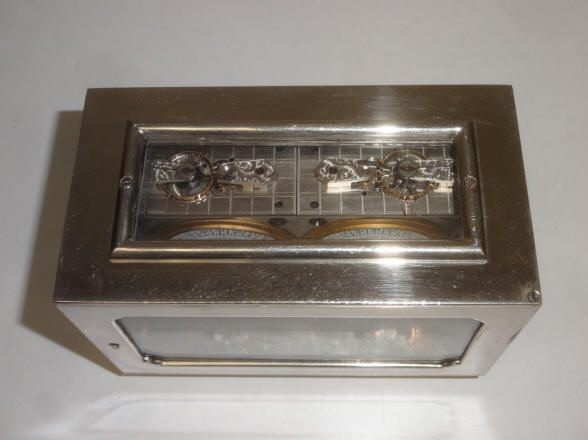
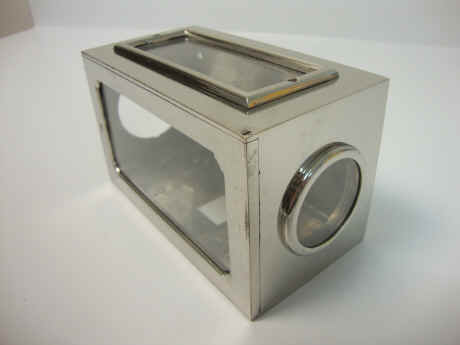
The side porthole offering a view of the specially decorated wheel work of this time lock's movement. Next a comparison of the special wheels in comparison with the standard five spoke design throughout the company's time lock line.
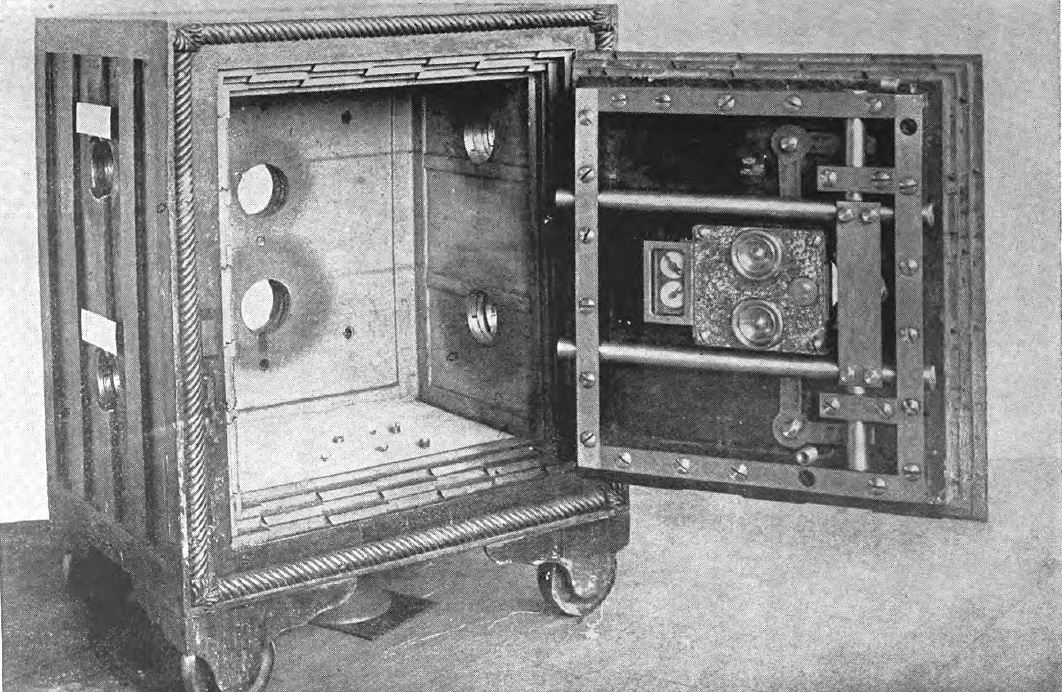
c. 1875. An early example from this company where the first time lock ordered from E. Howard was in July 1, 1875 numbered 1001. That time lock case shares the same front door scalloped corners and special exterior finish work but does not have the side portholes. This author knows of two other cases that has both the front door with scalloped frame and the side porthole windows. That movement is serial number 1159 and also has the specially decorated wheel hubs. It is my guess that that the portholes were used to show off the decorated wheel hubs. How many of these were made and how many survive is unknown. Time locks made under the Hall's name are rare as this company was only in business a few years before being merged into the Consolidated Time Lock Co. in January of 1880 to insulate his successful safe and lock business from his risky and untested time lock business.(1) Actually, only the name changed as the time locks themselves were nearly identical. Compare to the same style lock under the Consolidated name. Only the type of window showing the movement's escapement changed to the smaller round openings to increase strength against explosion. This case was also machined to a much thinner gage than later locks, that change also probably to resist explosion attacks. Note the very nice finish, these early cases were silver plated while later cases were nickel plated. Some Hall's and to a great extent their later locks manufactured under the Consolidated name suffered from degradation of the silver colored finish. It appears that their earlier locks had a better plating technique that their later locks lacked. This example also has a rare example of the escapement components being silver plated ver. the normal brass as well as square cross-hatch damascene work. 5"w x 3"h x 2.75"d. Case #11, movement #1105. file 72 The illustration below was included to show the unusual sideways mounting of the time lock as well as a very large single-cased dual combination lock. Normally, larger-sized, dual dial arrangements would be two separate cases of single dial combinations locks connected together externally rather than internally within one enclosure. If one looks carefully this is the very old style of Hall time lock as the door has the scalloped corners as shown in the first example on this page. The photo was taken from a publication issued for the 53rd Congress, 1893. Report to Secretary of the Treasury on Improving Vault Facilities of the Treasury Department. It is a primmer on safe cracking and a fascinating read on how many ways and how quickly a talented safe cracker can open nearly any safe made in the day. This photo was taken after several 4" holes had been drilled to demonstrate that such a hole can be made using a hand drilling apparatus in under four hours. The publication even shows how one can make liquid nitroglycerine from dynamite! The one model of safe that was impervious to safe cracking within the time necessary before the normal opening of the business was the Corliss planet safes.
(1) American Genius Nineteenth Century Bank Locks and Time Locks, David Erroll & John Erroll, pg 168. |