|
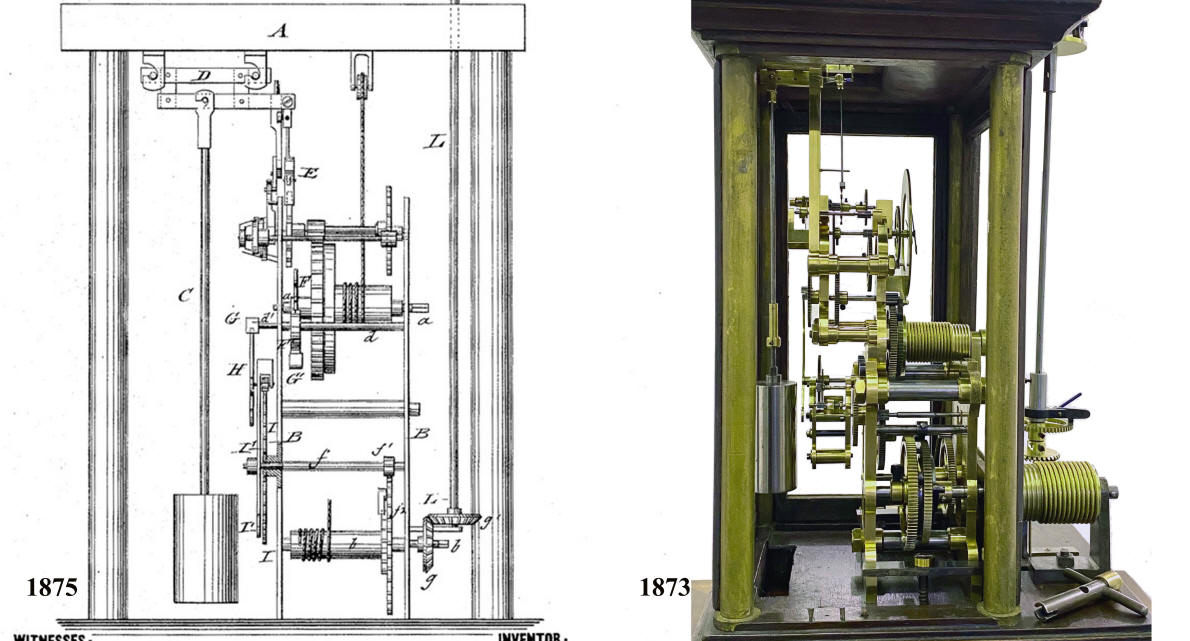
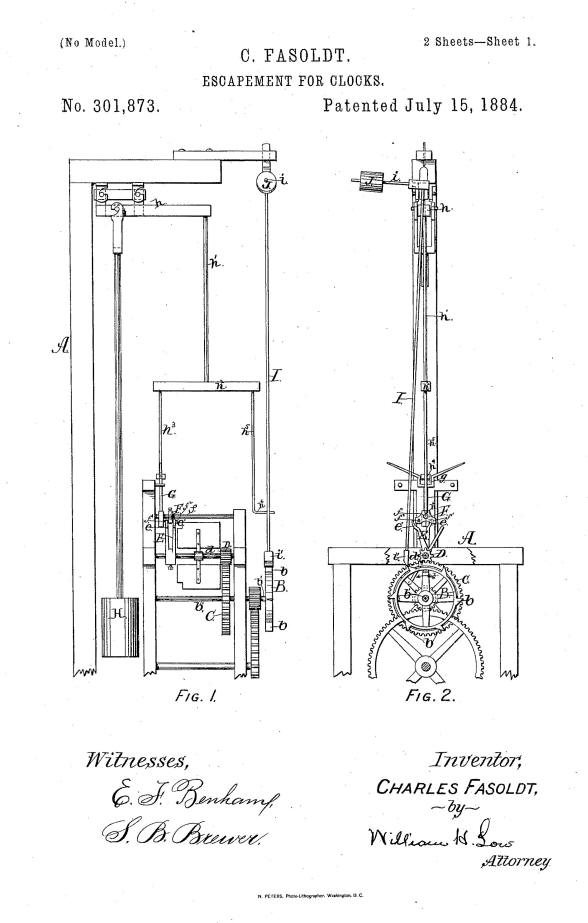
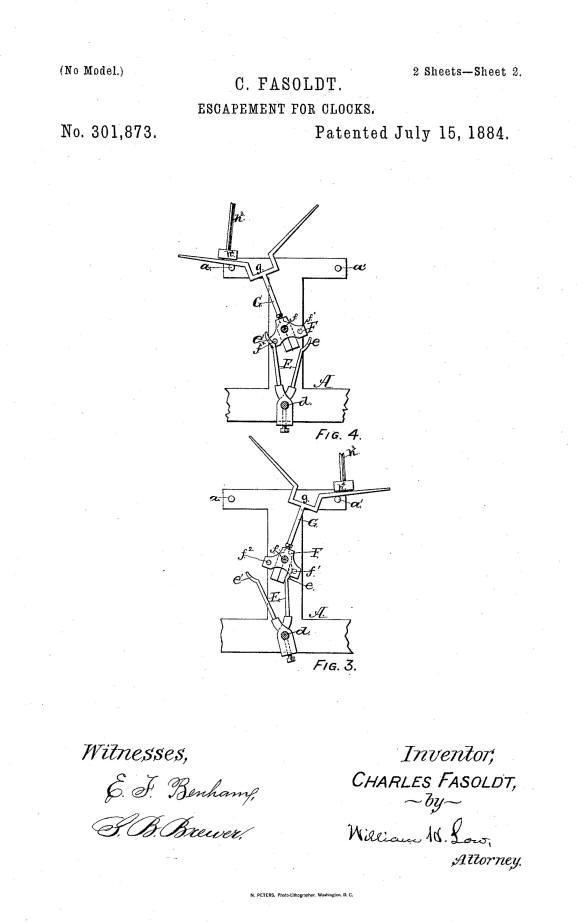
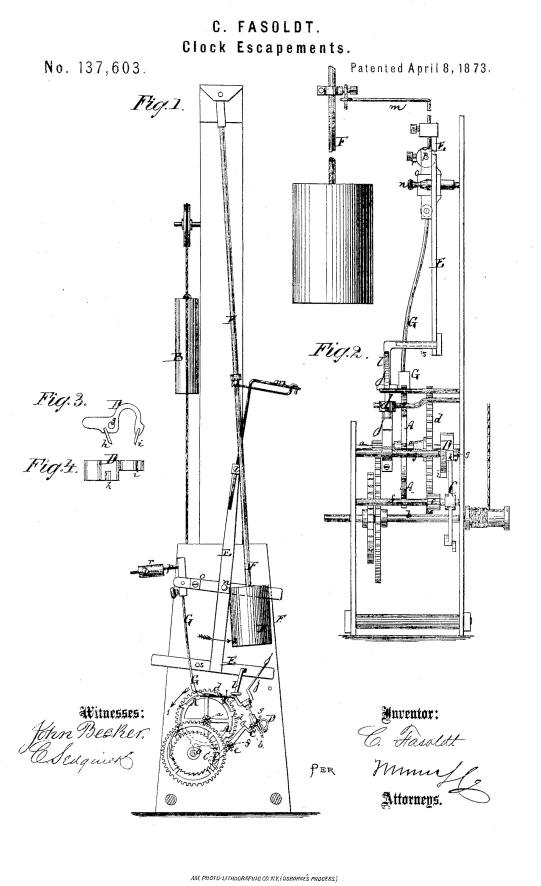
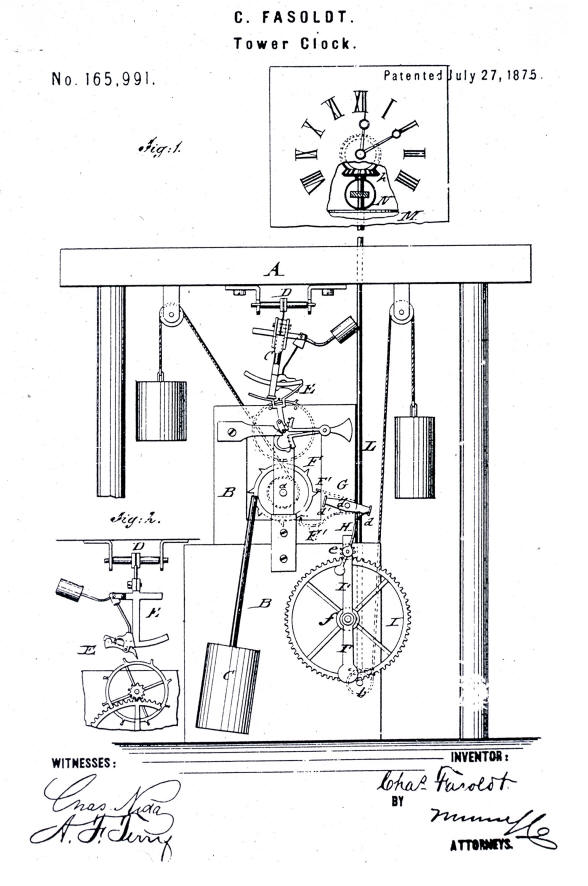
Charles Fasoldt, Albany, New York, USA, 1874. This clock was a model made by Fasoldt in 1874 to demonstrate his detached gravity escapement and remontoire dial actuator used in the tower clocks his firm produced. The model as well as a full sized tower clock that mirrored the model was exhibited in the Philadelphia Centennial Exhibition of 1876 and was awarded a gold medal. The escapement was used in his other domestic clocks that had the pendulum above the movement and the dial remontoire in the ten tower clocks he built. Of the four I know of one was installed in the Pennsylvania Reading Railroad, Albany Bank, and two still in their original installations at the University of Northern Iowa (since moved in 2020 from the base of the Campanile tower to the University president's office - it's good to be president) and the Union Church (now the Ebenezer Baptist Church) in Newburg, New York. Fasoldt is considered one of the finest and innovative American clock and watch makers. He had a fairly limited production of about 350 watches, 20 domestic regulators, 10 tower clocks and this model, making his work quite collectible. The model described here being unique. His regulator and shelf clocks are highly prized and of the finest quality and his extremely rare tower clocks of which only 4 are known in addition to this model are of great importance to historians and collectors. The one at Newburgh, New York, being the only remaining example in its original installation and still running, and was restored in 1996-98 by members of the NAWCC. One he made for the 1876 centennial remains on display at the Northern Iowa State University but is no longer functioning. His clock movements are even more beautiful than his watch movements. Charles Fasoldt was born in 1818 and was a native of Dresden, Germany. He emigrated to the United States in 1848, and from 1849 to 1861 he lived in Rome, N.Y. He moved to Albany in 1861 and lived there for the rest of his life, dying in 1898 and passed away at 9:00 PM on May 13, 1898. Photo courtesy and copyright © Donald Saff
|