|
Yale & Towne Manufacturing Co., Stamford, Connecticut - 2 movements, Yale Single Pin Dial, No. 2, No. 4
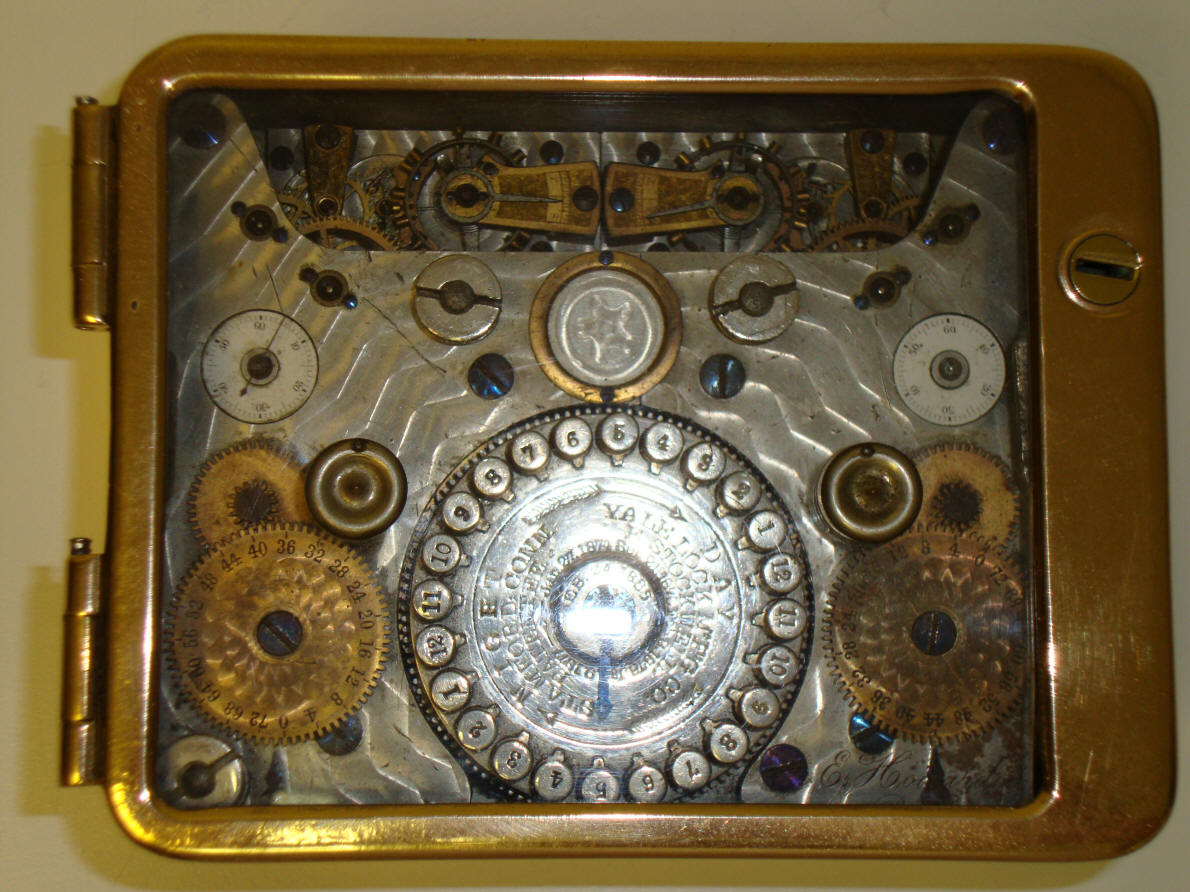
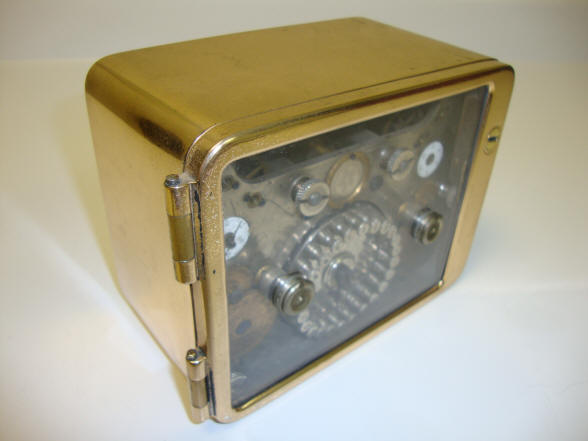
Yale Model #2, c.1890. Single Pin Dial Time lock. This lock was marketed as a smaller version of the Model #1 where size was of greater consideration. (See last picture above). Although it has a single pin dial vs. the double pin dial of the model #1 and #3, there still are two movements. An additional dial indicates the day of the week. This serves the same purpose as the Sunday Dial, aka "Sunday Attachment" on the Model #1. Although this unit is smaller than the #1, it was priced at the same $500. This model did not sell well and was discontinued soon after introduction. Just under 500 were produced and today fewer than 25 are known are to exist. Other examples of two movements controlled by one dial are Beard & Brothers Type 2 and Mosler's first time lock. 5.75"w x 4.5"h x 3.25"d. Case #96. Movement #444, file 100a A feature unique to this type of time lock (pin dial) is that as well as being ' off guard ' it can go ' on guard ' in accordance with the settings of the pins. As such it is designed to run continuously, unlike the majority of time locks which go off guard when they run down. However, if the movements are allowed to stop completely they will take the lock off guard, despite the settings of the pins.
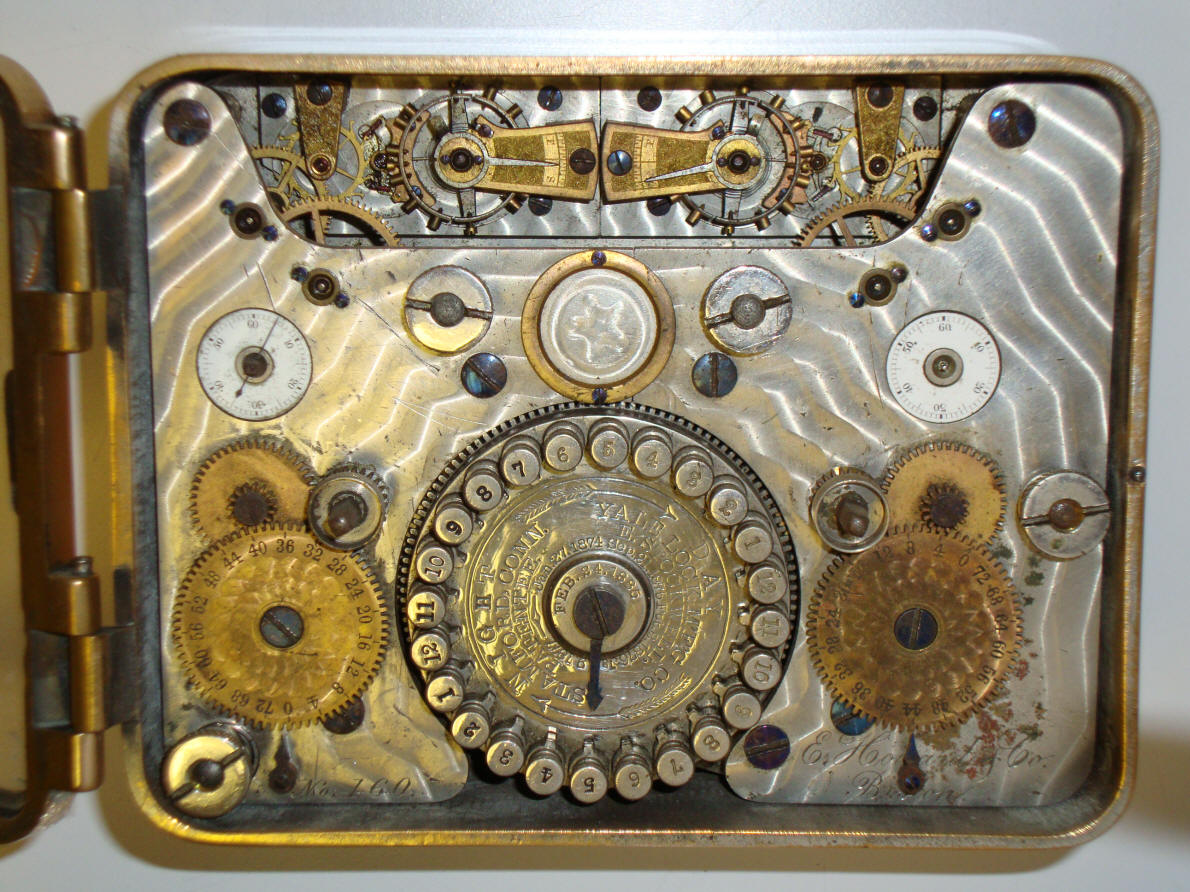
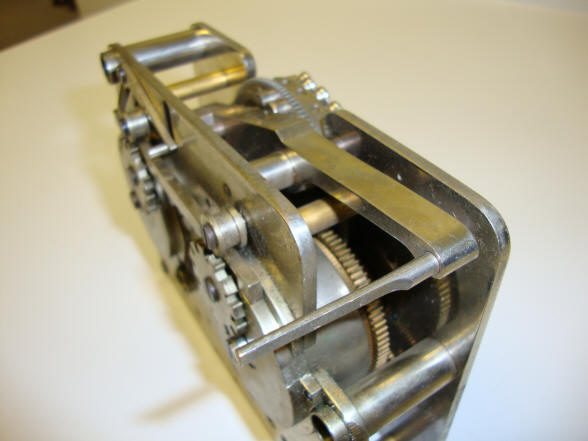
Yale Model #4, c. 1885. Same as below but without the Sunday Dial option. What makes this example unique is the lack of the weekday dial. Until this artifact surfaced it was thought that this was integral to the design of the #2. But it was an option; and one that was not often taken. The last two photos shows how this manifests itself in the lever(s) that release the bolt dog. In this example there is but one lever controlled by the two movements. In all other known examples as depicted in the last photo, there are two separate levers each controlled respectively by the separate movements and the weekday mechanism. The prior photo shows the single lever in this example, an unmistakable indication of the originality of this option, in addition to the decorative plate covering where the weekday dial would have been installed. There are two known examples of the Model #2 without the weekday option. 5.75"w x 4.5"h x 3.25"d. Case #166, movement #160. file 132
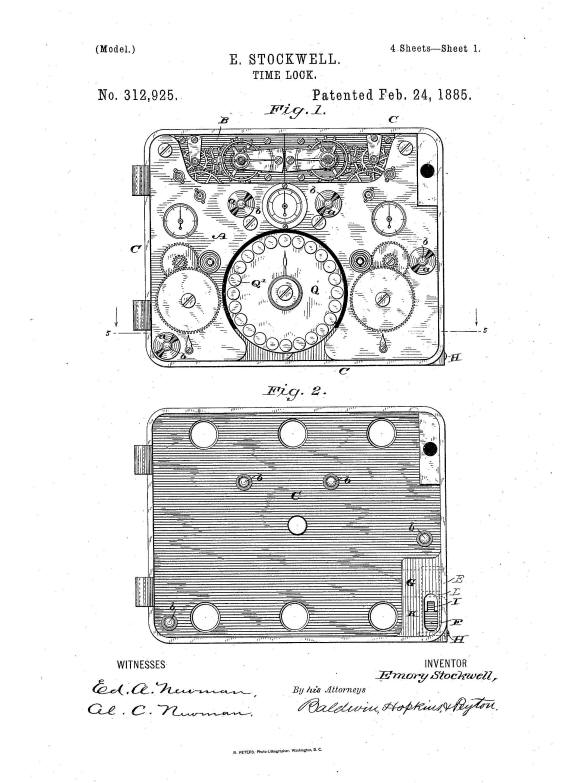
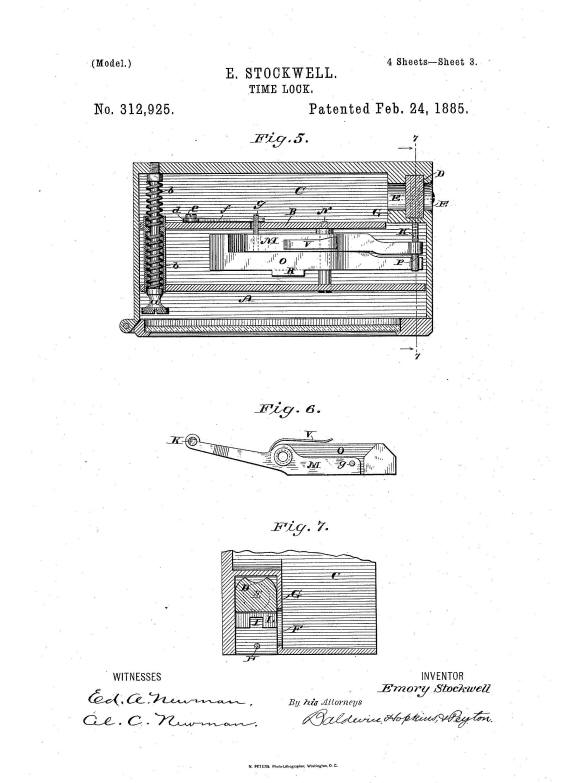
Above the drawings from patent 312,925 dated February 24, 1885. According to a section in the patent abstract one of the innovations claimed was that the entire time lock, and dogging assembly was completely contained with the movement plates, up to this point the two were separate units. Below is a page from a combined Yale and Sargent & Greenleaf catalog showing Yale's model designation for the Double and Single Pin Dial models. Notice the printing mistake where the Model #1 illustration is upside down, reminiscent of the famous 'Inverted Jenny' stamp.
|