Sargent & Greenleaf, Rochester New York - 1 movement, Model #4 - exclusively for the Corliss Spherical safe



The Corliss Safe Company was founded in 1878 by William Corliss, an industrialist with a background not in lock and safe making but in steam engine construction. His grand vision and financial wherewithal made Corliss Safe an instant success. The Corliss signature design had no recognizable door, but rather a concentric rotating core and shell. The safe offered no corners, edges, rivets or welds for criminals to exploit. Corliss largest model was the Planet Safe, an enormous safety deposit safe made in a forty-eight inch, thirteen-thousand-pound model and a sixty-four inch, thirty thousand pound model. The company's Spherical, the "smaller" model was also a behemoth, available in thirty-two and thirty-six inch versions, weighing eight and twelve thousand pounds, respectively. It is not known if Corliss Spherical offered a time lock before 1888, but in December of that year S&G introduced the Model 4 single-movement time lock designed specifically for use with the Corliss Spherical.
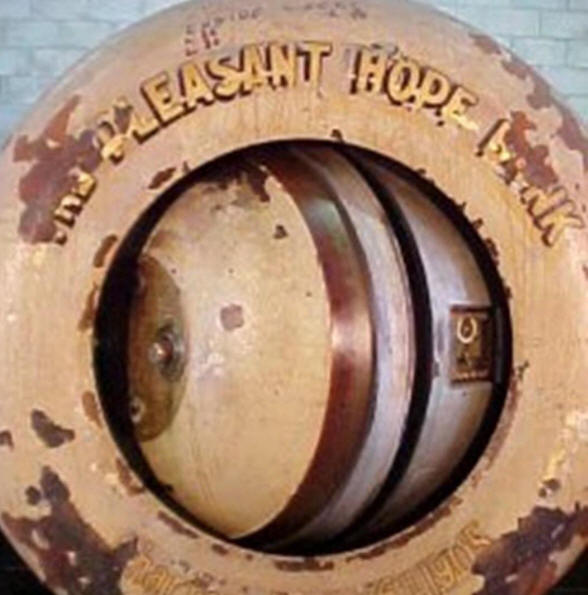
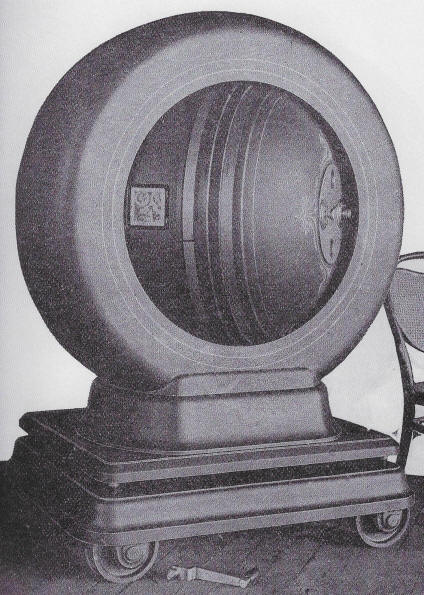
Sargent's single movement Corliss Model 4 was produced and sold in matched pairs. One Model 4 would be mounted on either side of the Spherical's revolving inner core, see photo below. Serial numbering on Model 4 cases was consecutive, but the Model 4 was not limited to to delivery to Corliss. Single-movement Corliss-specific batches were interspersed with double-movement Model 4s intended for for individual sale to other safe makers. The first recorded set of Corliss Model 4 time locks was recorded as "1000 R+L" (i.e. serial numbered 1000-1 and 1000-2) through "1022 R+L." The next ran from 1056 R+L through 1068 R+L. The serial numbers ran well into the 1600's
Individual two movement Model 4s began at 1023 to 1055, and ran into the mid 3000's. Further not all Corliss Model 4s had single movements. A Corliss publication included an image of a Corliss Spherical showing a two movement Model 4, (see below), but no examples of R+L-designated two-movement Corliss pairs have been found. So it is likely that this illustration only had the one Model 4 installed not a pair as with the single-movement Model 4s. (1)
 A
A
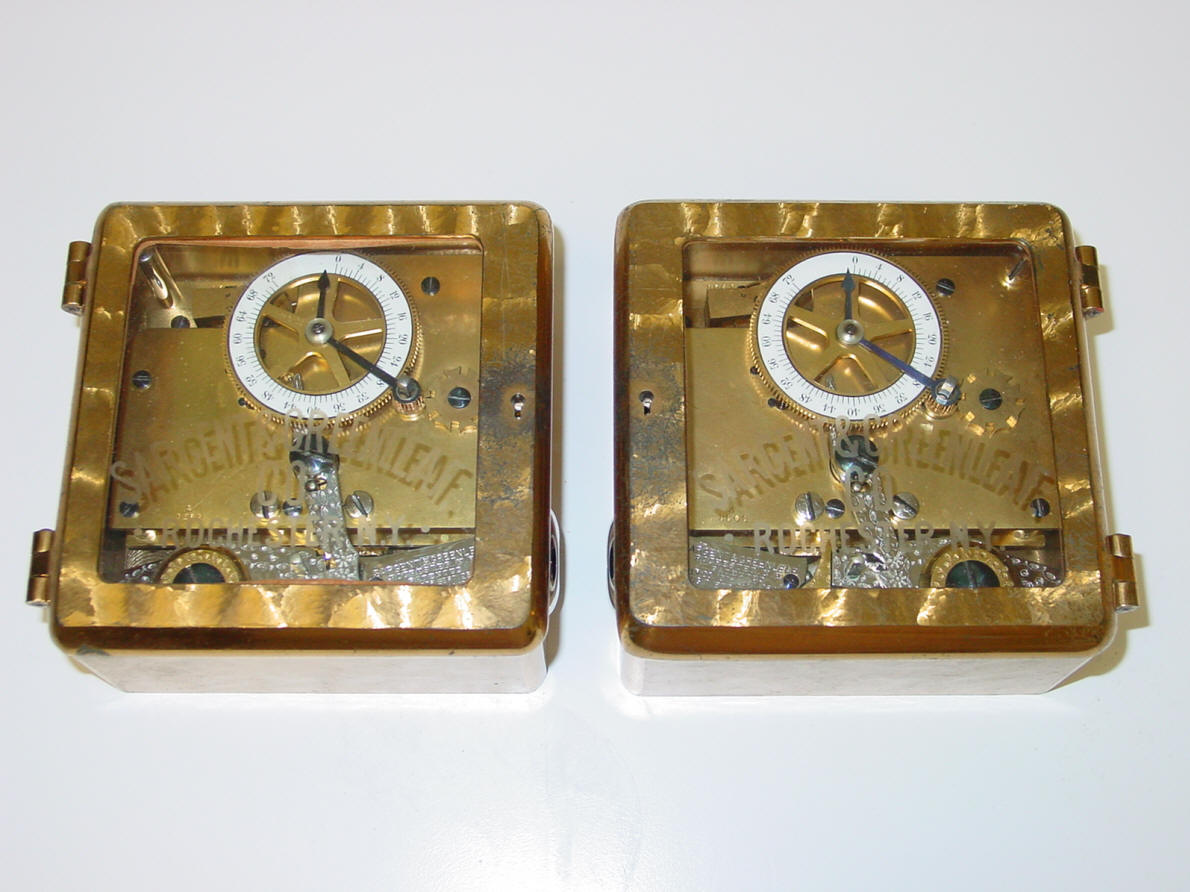
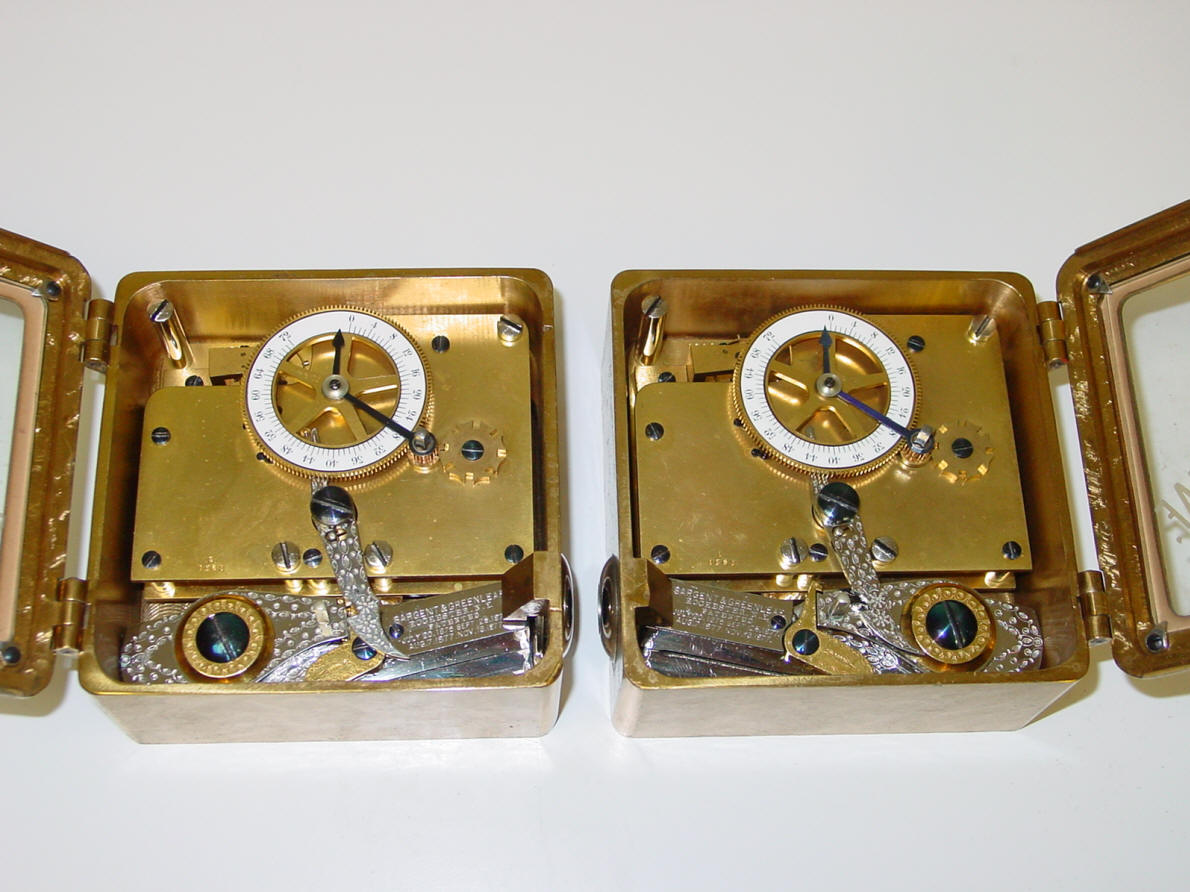
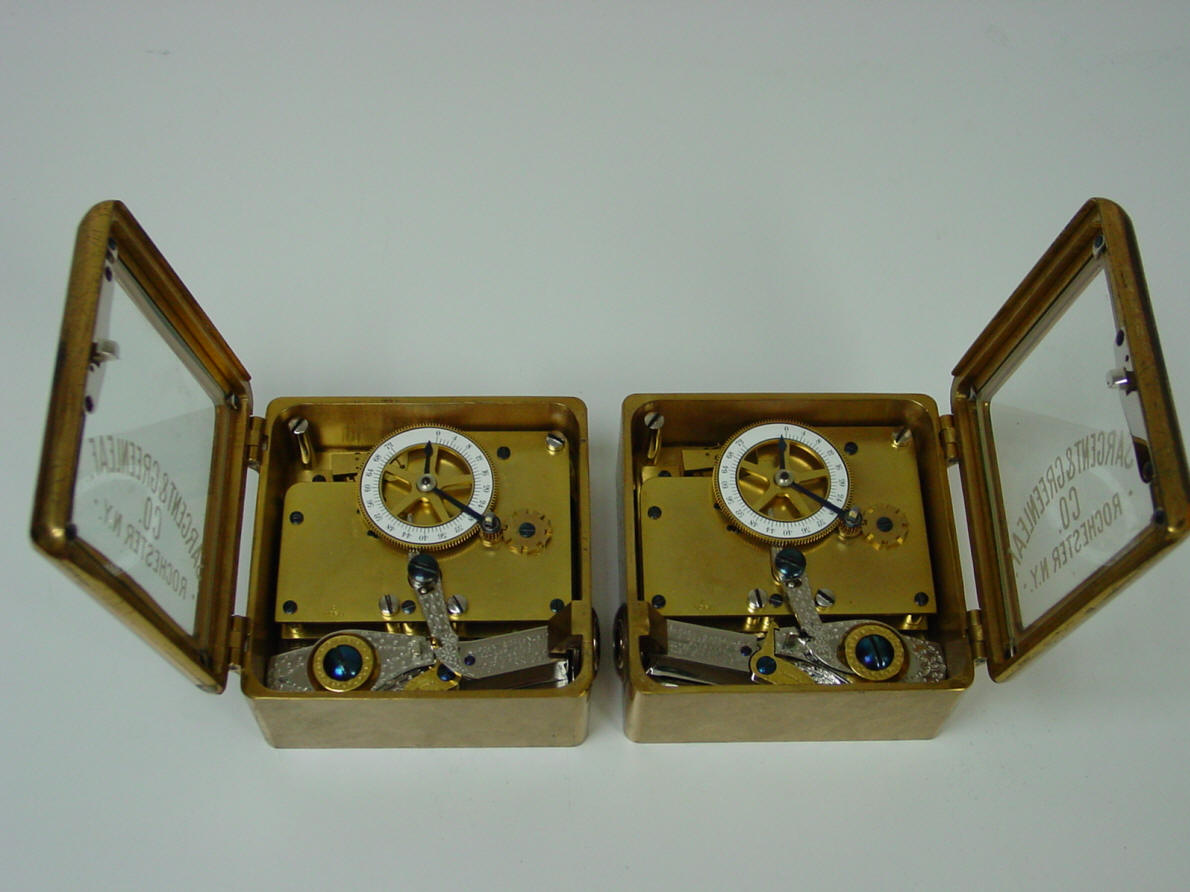
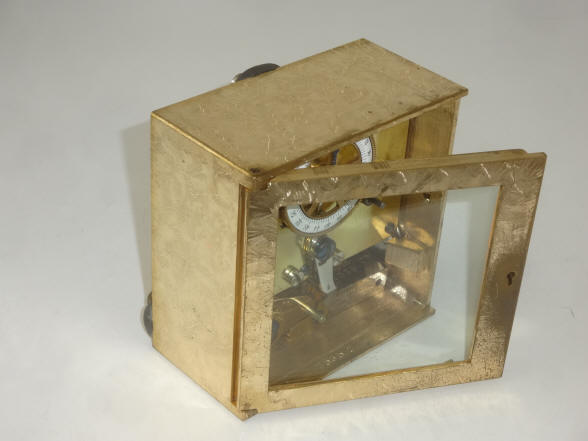
A. Model #4 - Corliss. The locks pictured were shipped September 8, 1900 according to an original S&G logbook, see below. This model was used (in pairs) exclusively in Corliss 'Cannonball' Spherical style safes. Note original etched glass which often is missing due to breakage. Sargent and Greenleaf invented the first commercially produced practical time lock and made their own movements. Most other firms, notably Consolidated, Yale, and Diebold used movements from outside suppliers mainly E. Howard & Co. Around 1902 Howard exited the time lock business when it was purchased by the Keystone watch company and Seth Thomas filled much of this business. Other time lock makers who arrived later, as Mosler Safe Co., and then Bankers Dustproof, used American Waltham Watch and Illinois Watch Company pocket watch movements. Beginning around the 1950's movement production shifted from the United States to Switzerland. Sargent and Greenleaf ceased production of their own movements due to high domestic costs in 1953. This lock has the company's jeweled (damascene) bronze case. They had two types of damascene patterns, a spotted and a more random 'crystalline' pattern. This having the latter. 4 1/2"h x 4 1/2"w x 2 3/8"d. Case and bolt 1541-2 (left), 1541-1 (right); movements 1563-2 (left), 1563-1 (right). file 110
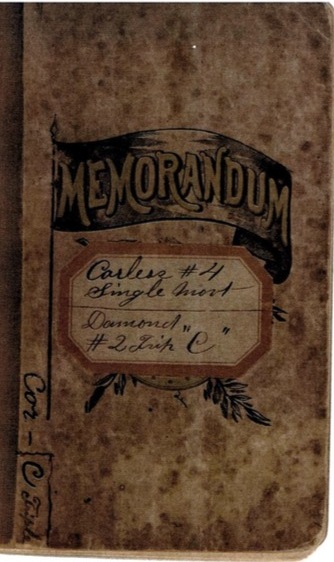
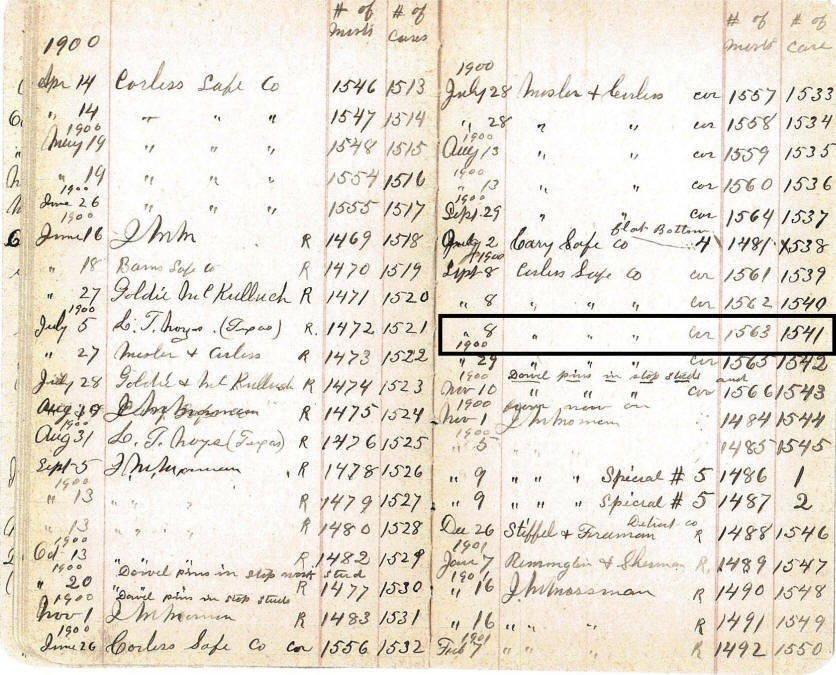
Entry for the time lock above from S&G logbook showing case #1541 and movement #1563 and sold to the Corliss Safe Co. Notice on the cover of the logbook that Corliss is misspelled as "Carlese" or maybe "Corlese".
 B
B
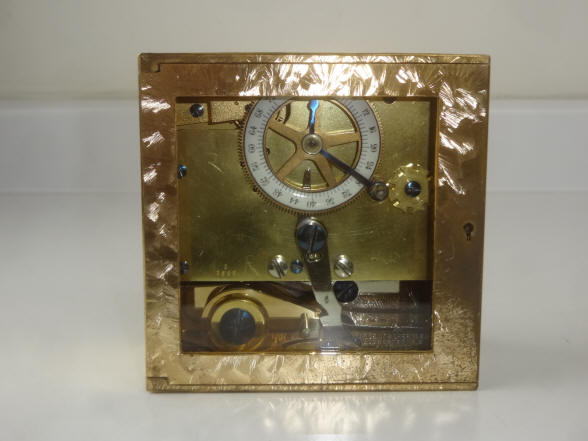
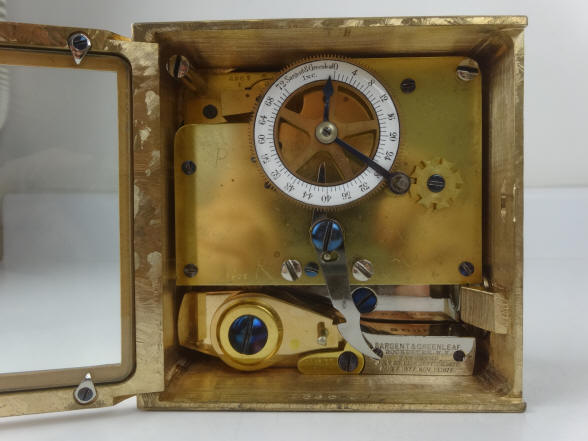
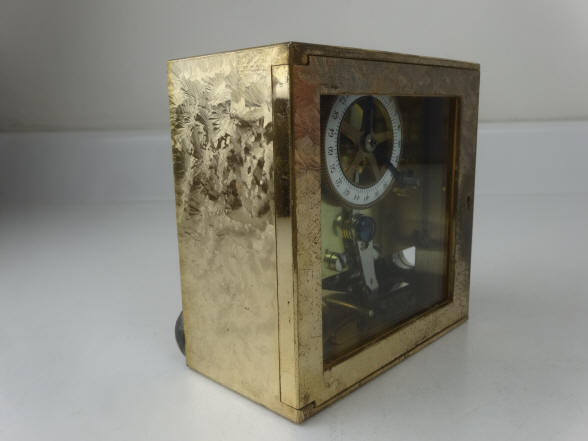
These four photos show an example of a S&G #4 for Corliss that has a pin-hinged countersunk door and sharp angled corners. This writer has seen only a few of these before on both the single and two movement equipped model #4 cases. It is unknown on any other S&G models. The case is later in the production run, but the same door design is seen on a very early two movement model, but like this example it may have been placed into a later dated case. It is likely that the hinge-pin design was used very late in the production run. Or perhaps a particular safe maker specified this type of case. On the other hand the single movement models are only known to be provided to the Corliss company and they used both this and the overlap door designs. S&G did use sharp angled corners in many of their later, post 1920 production run models but not the pin-hinged door.
Hall and its successor Consolidated Time Lock Co. used this style of case door across their line of time locks and is the only other maker I know to have employed it.
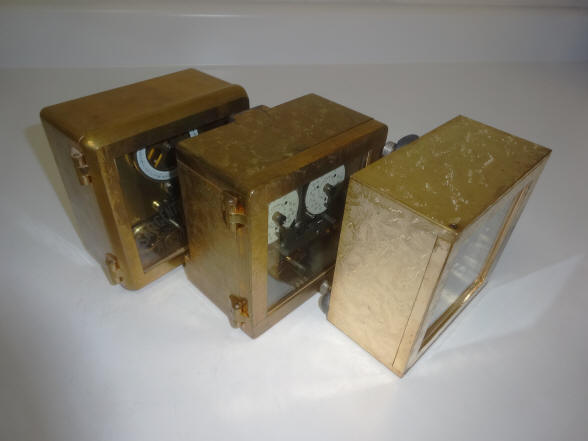
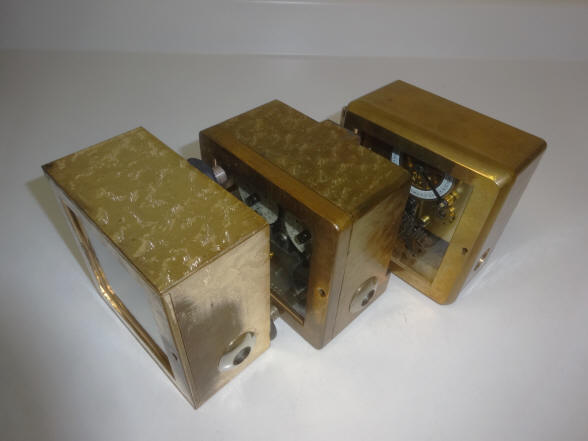
These two photos show the three types of doors S&G used throughout their line. The most common is shown to the left end and right end in each photo and is an overlap door with butt hinges. The door has an overlapping edge over three sides and is flush on the hinge side. The middle example is a flush mount door on all four sides also using butt hinges. Both of these examples used rounded corners. The example discussed here has a pin hinged countersunk door within the case on three sides, and an angle flush on the hinge side with angled corners. In this author's opinion the pin hinge design offers the greatest resistance to outside contamination and gives the lock a clean, sharp look.
B. Model #4 - Corliss. The movement is only 26 serial numbers after the example above, but has a much later dated dial. Before 1896 the dials had no attribution as seen in the first example, the "Sargent & Greenleaf, Inc." dial on this example began in 1918. It's unlikely only 26 movement pairs were produced in the intervening 22 years, the dial is quite likely a later replacement on an earlier movement. The wide gap between the movement and case serial numbers and the different suffix numbers also indicate that the earlier movement was placed into this later case. This lock was obtained for the rare case and door design. 4 1/2"h x 4 1/2"w x 2 3/8"d. Case and bolt 2535-2 (left) movement 1567-1 (right). file 242
Below is a photo of a S&G single movement Model 4 in a Corliss Spherical safe. There would have been another on the opposite side of the sphere as these were always found in pairs. Next a Corliss publication illustration of a Model 4 two movement in the style same type of safe. It is unknown if a safe with this configuration was ever made, but there is no reason why it could not have been done. It is unknown if this would have had only one or a pair of of these two movement model #4's, but the pairing is unlikely since no pared cases for the two movement version have been found.
(1) American Genius Nineteenth Century Bank Locks and Time Locks, David Erroll & John Erroll, pg. 240