Theodor Kromer K.G., Freiburg, Germany



Their time locks as illustrated by examples A and B below were designed to be similar to the Yale company's model K22 and Triple K. But were not direct "drop in" replacements since their case mounting holes and case bolt hole are not identical. While the movements were the same "coffin style" shape as the Yale Type 'L', these are larger and the mounting holes are not interchangeable.
 A
A
 B
B
 C
C
Demonstration video of the electrical tell-tale to indicate whether the bolt dog is in the off or on-guard position. Theodore Kromer time lock, Freiburg, Germany, c. 1950-1960's.
 D
D
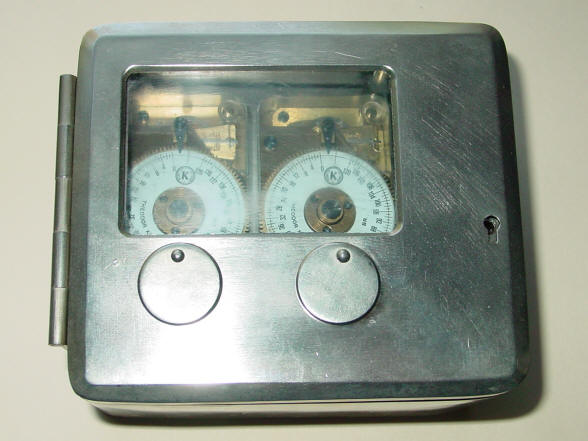
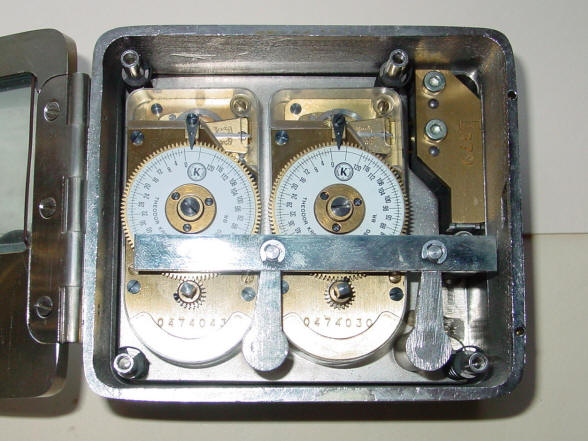
A. A Kromer from the 1950's. Meant as a direct drop in replacement for the Yale model K22. file 26
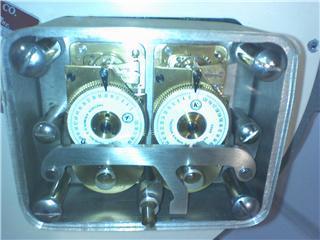
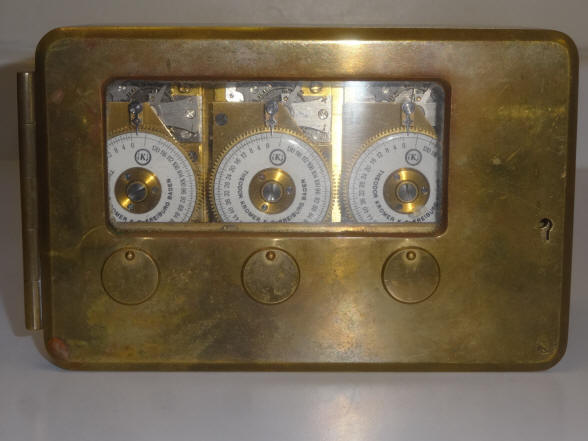
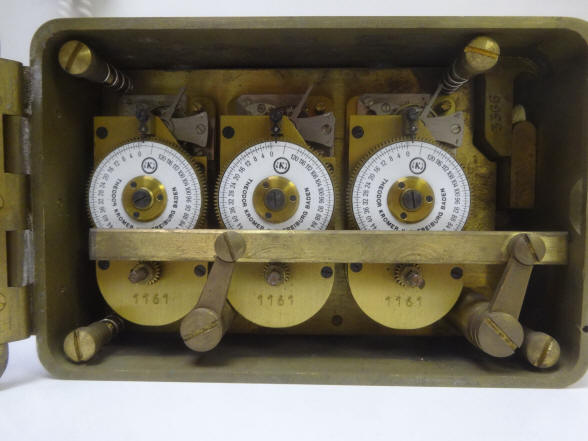
B. A three movement Kromer from the 1950-1960 period in a case style and internal dog bolt mechanism very similar to the Yale Triple K. The height and width dimensions are identical but it is considerably less deep at 2.5" vs. 3.13" than the Yale due to the fact that Yale uses a much thicker and heavier anti-dynamite movement containment plate. This plate is supported by four springs from the rear of the plate as well as the front and these are secured by the four bolts seen in the corners of the time lock box in the second photo. The Yale also has a door hinge milled from the solid case shell as well as the door plate and pinned together, while the Kromer uses a butt hinge countersunk into the door and surface mounted to the case and held with screws very much like a conventional door hinge. The mounting holes are different from the Yale, so it was not meant to be a "drop in" replacement for a Yale. It is overall less robust and of cheaper construction and presentation than the Yale counterpart. Note that all of the movements are stamped with the same number, so these are probably a model rather than a serial number. Case #3366, all movements #1161, 6.25"w x 4.25"w x 2.5"d. file 180
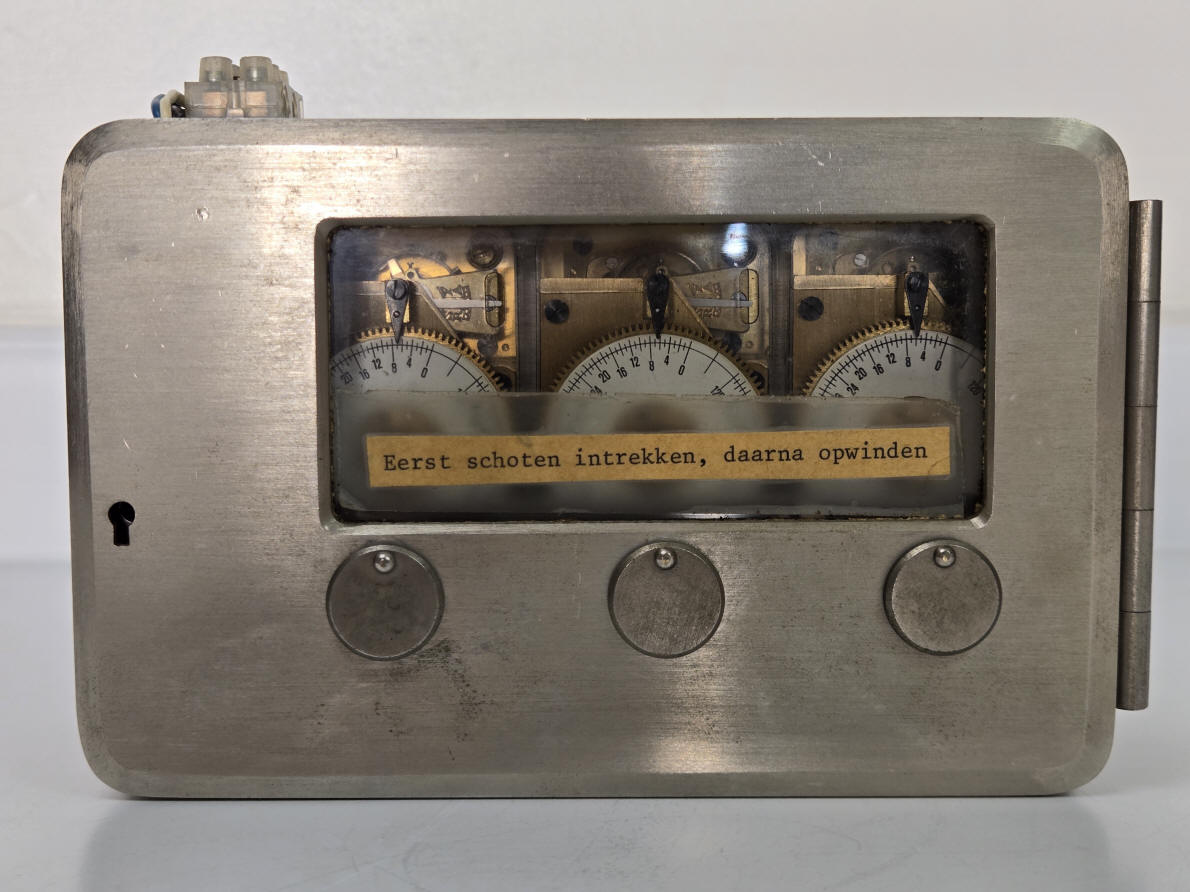
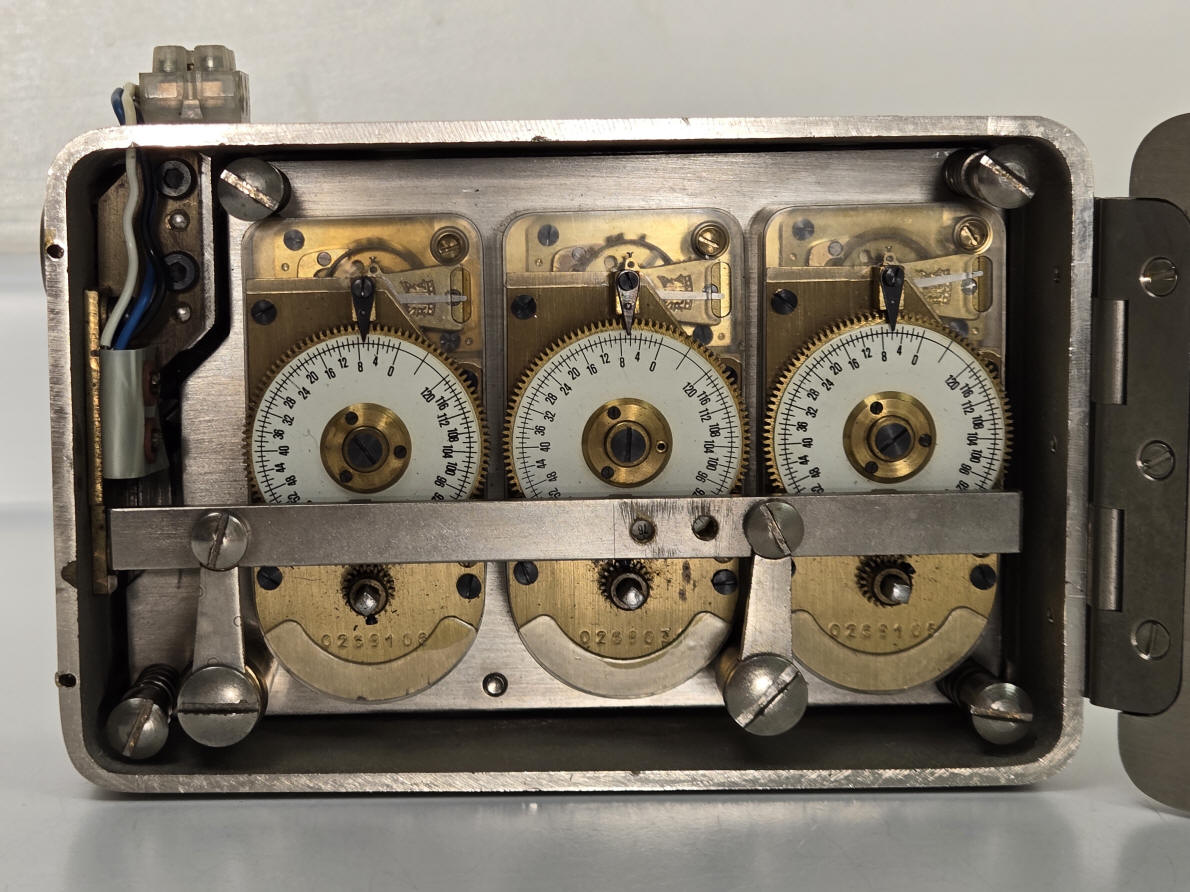
C. A Kromer from the 1950-1960 period same as that described in example 'A' but with a silver case finish and equipped with an electric sensor to act as a tell-tale to let personnel know if the bolt dog was open or closed while the safe was closed. Movements have no identification and are of a different style than those in example 'A', but do share the exact same mounting screw positions for the movement plate. Each movement is encased in a clear plastic dust-proof enclosure, the first time I've seen this and a clever idea. The typed label on the window aperture is in Dutch and reads, "First retrieve bolts, thereafter winding up" This is a deaccession from the LIPS Collection, Netherlands. Case #876, movements #01269031, #0269105 #0269106. file 367
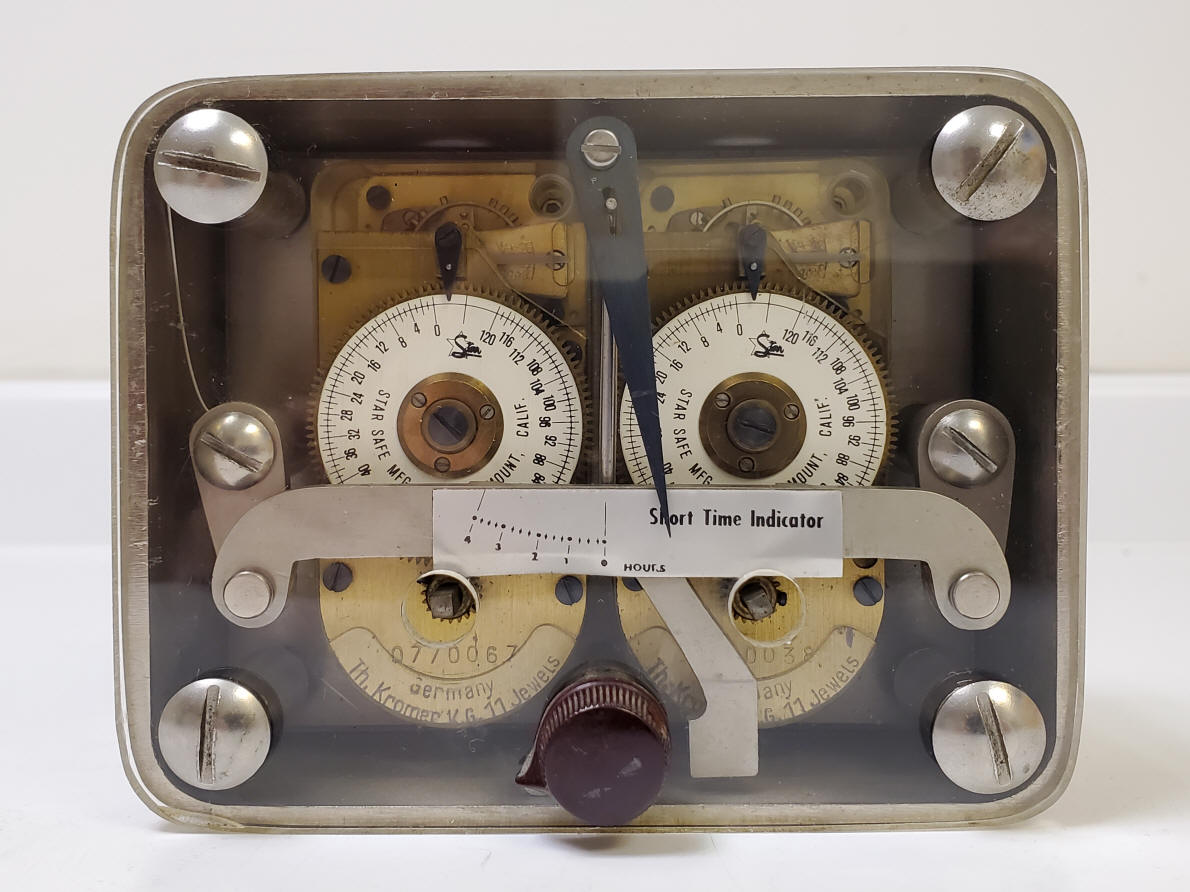
D. Star Safe Manufacturing Co, Paramount, California with Kromer movements, c. 1960. This is a Kromer lock licensed to the Star Safe company. This model has a special analog sector dial attachment labeled "Short Time Indicator" that shows the final four hours, see video. I have seen a few other of this model and none has this attachment. file 19
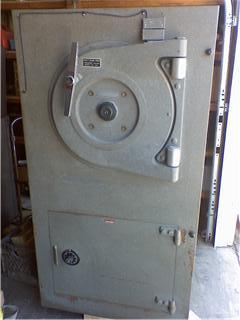
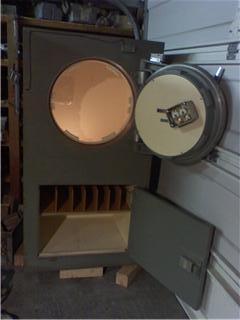
Below is a Kromer time lock in a Mosler safe door. It does not have the optional short term indicator.