|
Consolidated Time Lock Co., Cincinnati, Ohio - 1 movement, Harry Dalton Dual Guard
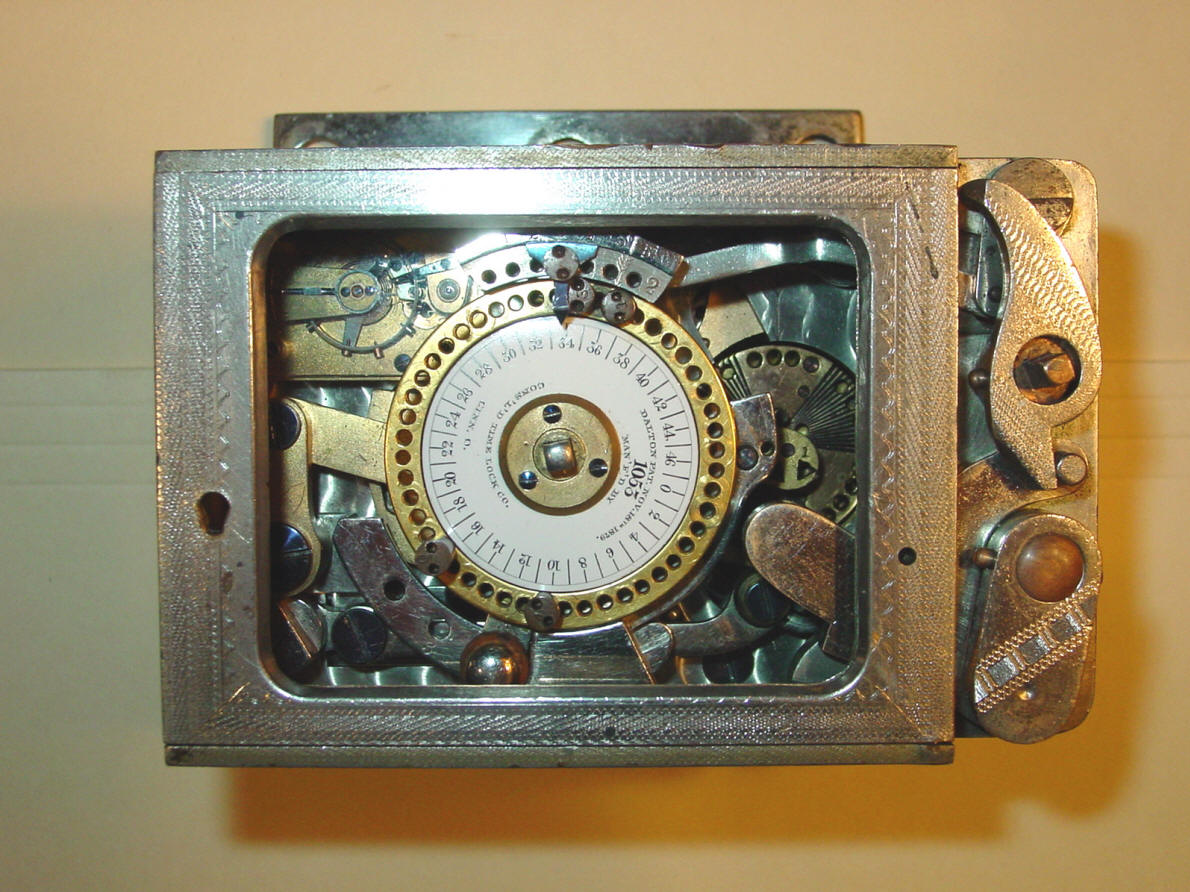
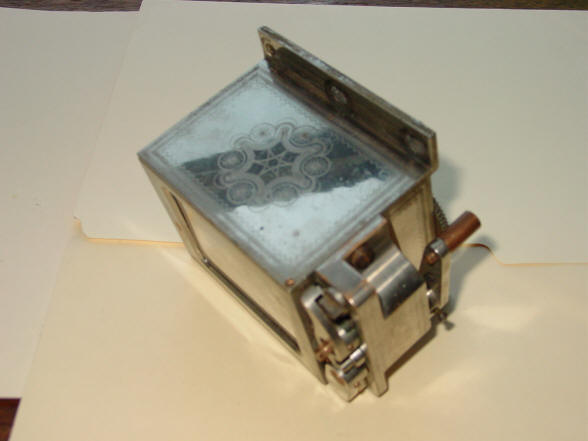
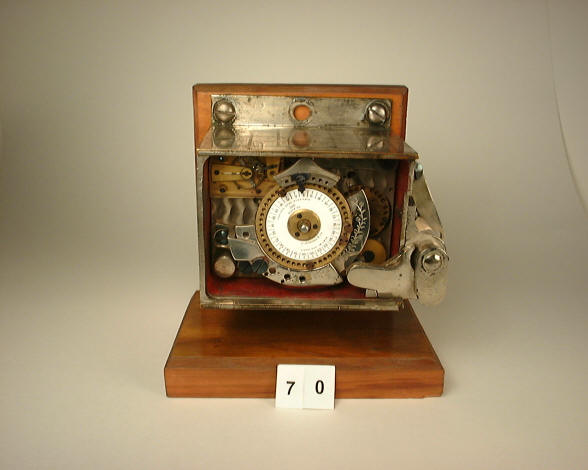
The Dual Guard was first produced in 1884 and was a successful product being sold for use with combination locks made by MacNeal & Urban as well as by Hall Safe & Lock. The Dual Guard used an unusually expensive E. Howard movement and, at $55 wholesale ($1500 in 2017, and retailed for about ten times that amount or $15,000 today), and exceeded that of the Yale Double Pin Dial. The Dual Guard was equipped with its own internal combination lock, allowing the Infallible mechanism to be opened with from one to four numbers by shifting the pin visible below the time lock dial. Since the Dual Guard was intended for use with locks other than Hall's Premier, it used a gear on the case back to connect its miniature combination lock to the main combination lock rather than the armature found on Hall's Premier. Two styles of the Dalton Dual Guard were made: one that engaged the bolt with a plain hinged armature and a second that used the wound spring mechanism seen here on the outside of the time lock case. (1)
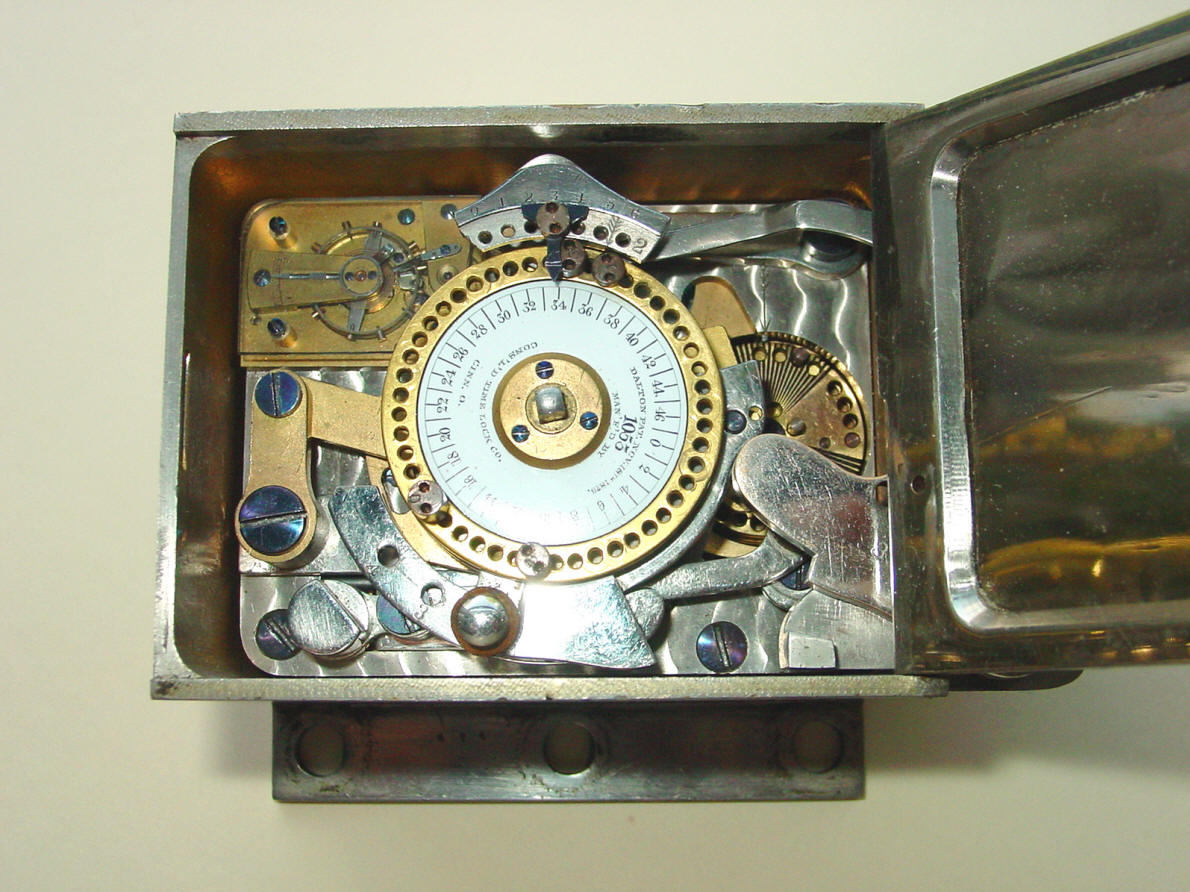
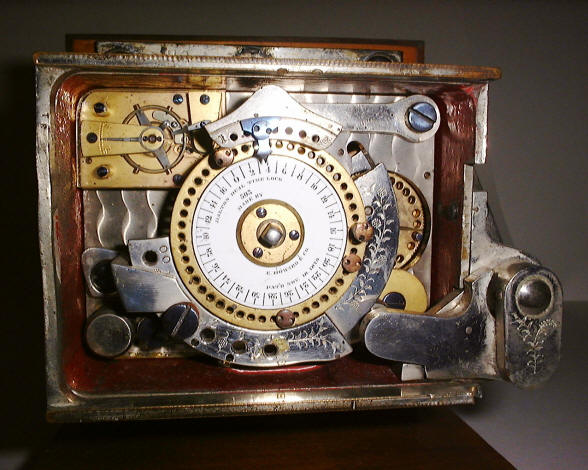
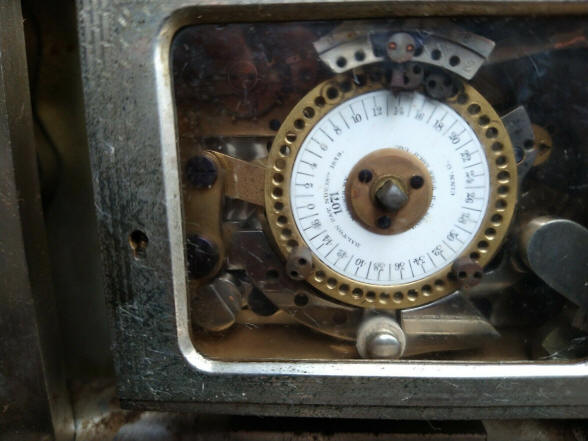
The Dual Guard was by far the most complex and expensive stand-alone time lock made. It's diminutive size makes this all the more remarkable. Located below and to the right of the main dial is a small permutation (combination) lock represented by a single turning disk with small pegs in its holes corresponding to the combination numbers. As the disk is turned back and forth the armature is lifted upward by discrete amounts eventually releasing the bolt, provided the time lock is also off guard.¹
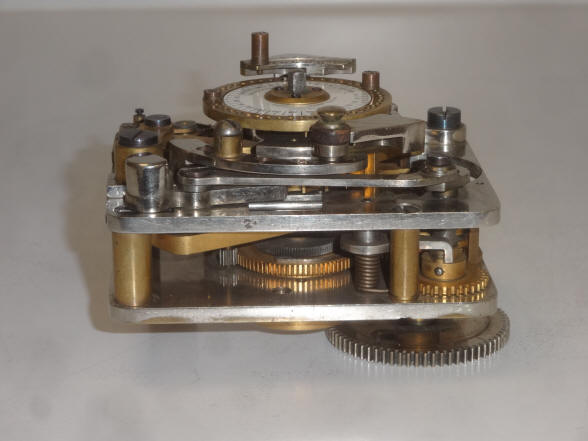
The spring-assist gear mechanism is clearly seen in the second photo.
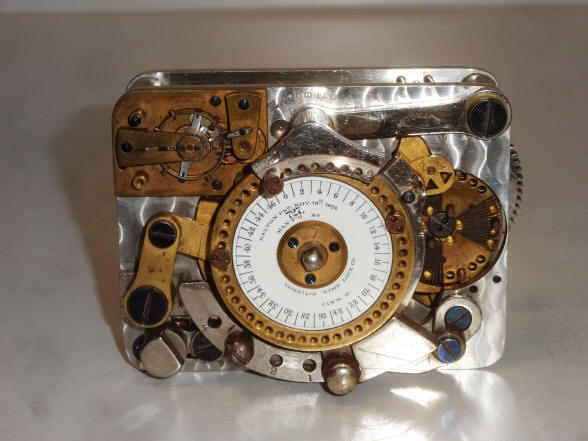
One can just make out the E. Howard signature on the upper middle of the front plate.
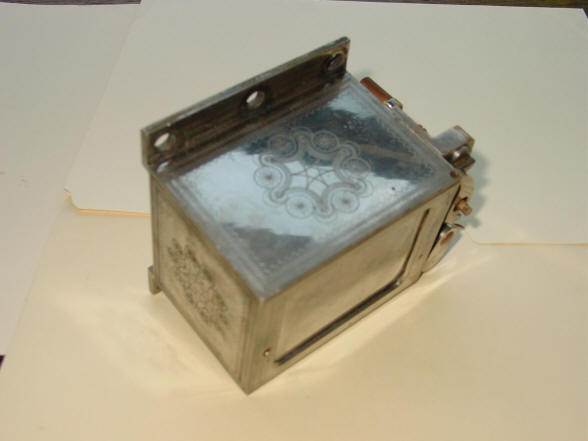
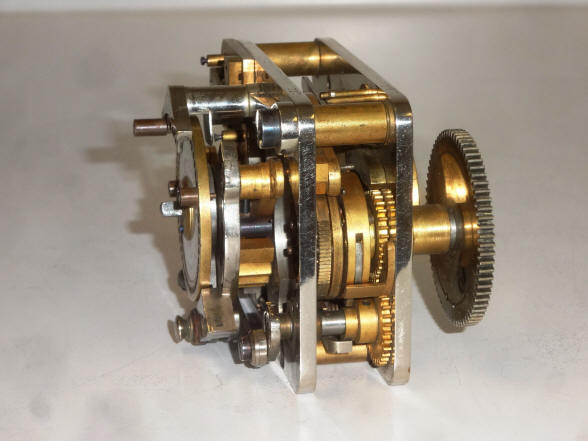
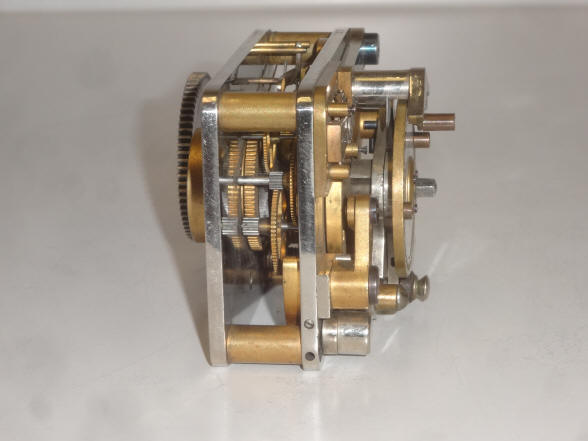
These bare movement photos are of different but identical movement #727. It has a triple plate design, that is there are two parallel plates between which much of the movement wheel works is mounted and a second area for many of the mechanisms controlling levers. What makes this design so interesting is the multiplicity of those levers mounted above the front plate. The on-board programmable, miniature permutation lock can be seen in the first and third photos.
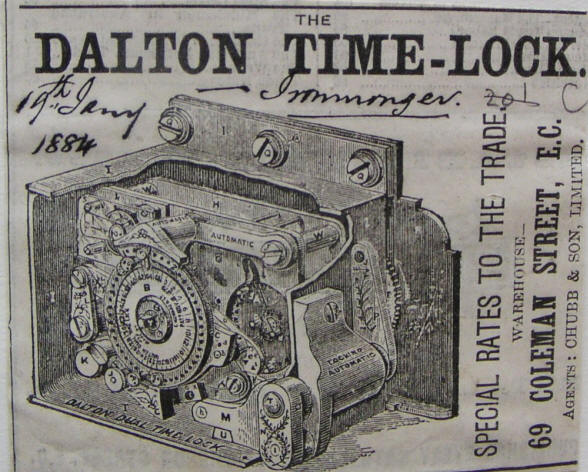
This video is a description of the Dalton Dual Guard time and combination lock made by the Consolidated Time Lock Co. in 1885. It was the most complex and expensive stand-alone time lock until it's incorporation into the Dalton Triple Guard in 1888. While this lock is based on the patent awarded to Milton Dalton, the design described in the patent is quite different from the production model to the point that it was only marginally helpful in ascertaining the functionality of the lock. Next is an illustration from a British publication, The Ironmonger, a trade magazine dated January 19, 1884. So one can see the Consolidated was mounting an international advertising campaign several month prior to the first delivery of movements from the E. Howard company in May of the same year. Chubb was a major safe maker in Britain and is still in business today.
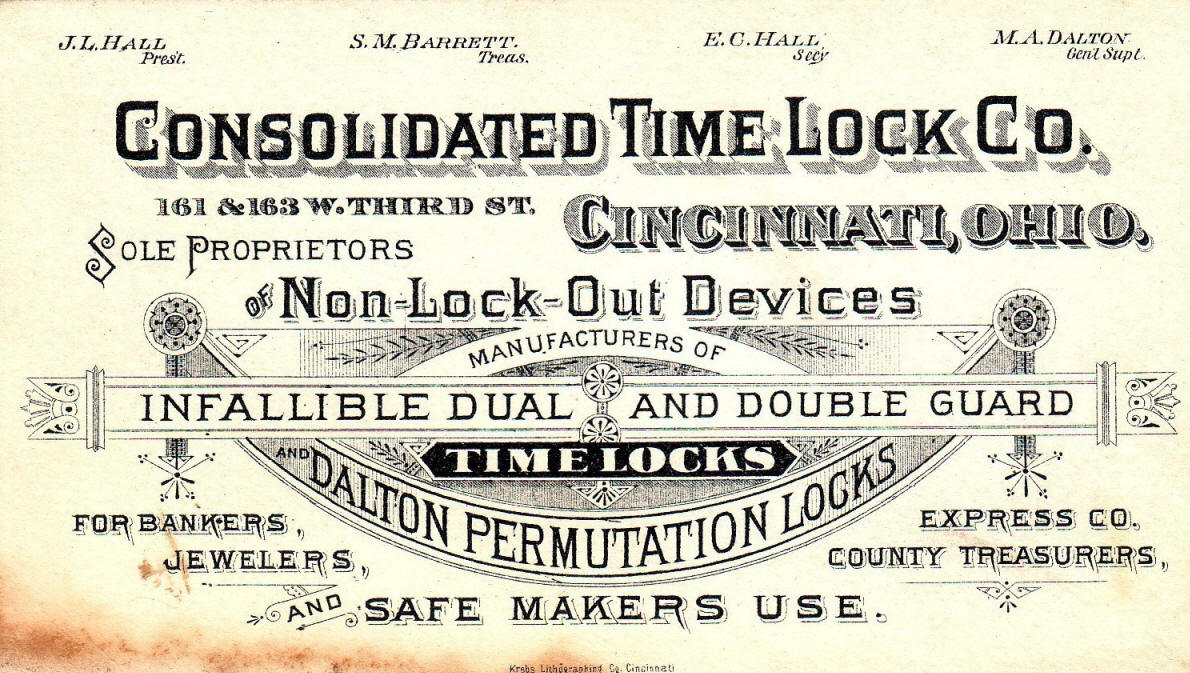
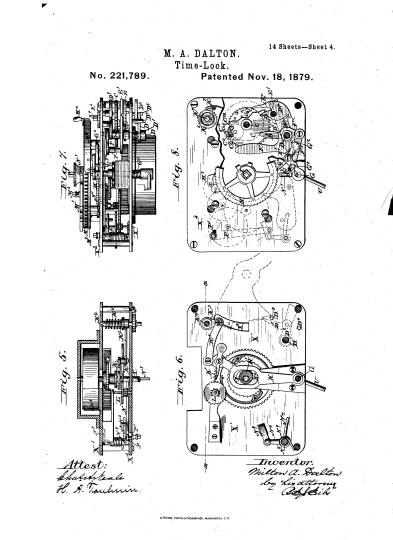
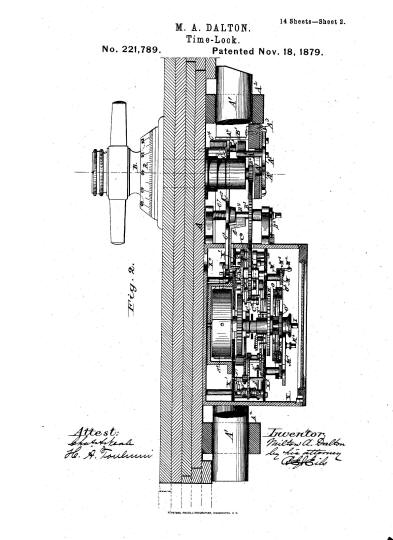
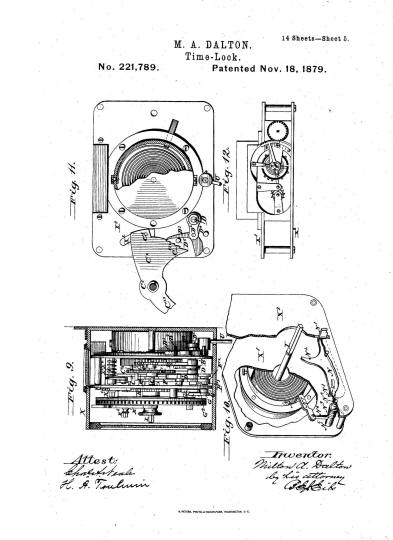
Model Dual Guard, c. 1885. A complex, and exquisitely made time lock using Milton Dalton's patent #221,790 filed May 8th and awarded November 18, 1879. The Dalton company was another short-lived firm as was Hall's Safe & Lock Co. and both were merged into Consolidated in 1880's. It was sold for use with combination locks by McNeale & Urban as well as by Hall. This lock is essentially the same as when made by Dalton when it was an independent firm in 1879 and has many unusual features. It can be set to function periodically through the day and night as desired. It featured what the company called the Infallible Backup combination lock and was available with an optional spring assist (seen on the right hand side of the case). The Dual Guard's Infallible mechanism had its own specially designed geared connection to the safe's combination spindle (located on the rear of the case). This specially designed Infallible operated a miniature combination lock wholly included in the time lock. The tiny combination lock is visible behind and to the right of the time lock's dial. The movement was expensive to produce and wholesaled for more than the visually impressive two-movement Yale Double Pin Dial at over $55 - a great deal of money at the time. Typical retail pricing was at $500. No other single movement time lock has as many parts or as complicated a movement. This lock was also used in Consolidated's Triple Guard, the most complex time lock made. Fewer than 500 of the Dual Guard were made with less than ten known to survive.(2) case #474, movement #1055. 4 1/2" w x 2 7/8" h x 2 3/4" d. file 31 A circular from the Consolidated company of 1884, below, describes the incredible features of this lock (3). After reading it, one wonders if it can also serve up breakfast! It can unlock when the specified hour arrives without the setting of any combination; or if desired setting the combination at that hour may be required. It permits one, or may require two persons to set up the combinations and unlock after the timer has released its control. It is wound until a stop is felt; this sets it exactly right even in the dark; over winding is impossible. It will permit unlocking on Sundays or holidays at any selected hour, and for two hours after, and then will resume its guard automatically; or it can prevent any unlocking on these days. It can assume its control immediately after closing, and prevent unlocking; or it can automatically assume this control at any desired hour after winding. No other lock is required on the door, as it performs all the functions of both a timer and combination lock. The Dual Time Lock can be used as a time attachment if desired, controlling any combination lock. The Dual Time Lock can be applied in such a manner as an attachment to a combination lock, as to prevent unlocking by the cashier and his assistants in charge of the regular combination, until the specified hour; but by means of a second combination, secretly in possession of the proprietor, unlocking at any time may be effected in case of a conflagration or other great emergency. With this lock you may instantly reduce its power (by moving a button) from four combinations to three, two or one, or may cut off all combinations, making the lock only a slide bolt. Should the time movement stop, break or from any cause act improperly, the banker is not permanently locked out, but has a means of access by the combination mechanism, which can be used after the predetermined hour. It can be arranged that in a case like this the cooperation of two, three or four persons is necessary in order to unlock. Of course this combination mechanism is not effective except when the timer is off guard, or in case of a lock-out. Should the combination mechanism break, or by any means become inoperative, the banker is not permanently locked out, but has a means of access by the timer mechanism, which will automatically unlock from four to ten hours (according to its setting) after the predetermined hour, even though the combination parts have been rendered useless and without power to act. But aside from this protection, premature stoppage does not unlock, for the combination numbers must first be set up; but when the banker sets his lock for opening, he does not need or desire the knowledge of the combination numbers, and it remains a secret in the maker’s hands or with a neighboring banker. The banker can, if he desires, be saved the trouble of setting up his combination numbers to unlock. This lock can be set to do its own unlocking at the specified hour. Should the timer stop when set for automatic unlocking, entrance can be had after the specified hour, but only by setting up the combination numbers. It can be set so as to permit unlocking on Sundays or holidays at any selected hour, and for two hours afterward; after this period the timer resumes its control without any assistance from the banker, and prevents unlocking until the selected hour the next day. So that if the banker finds that there is no occasion to unlock during these two hours, he is not obliged to go to the bank to reset the timer, for he knows that it has already been set to automatically resume control. The patent issued to Milton Dalton, 221,789 on November 18, 1879 at 28 pages, is to this author's knowledge, the longest in terms of pages and drawings (14 drawing sheets, 14 explanatory pages in all). For other locks that have patent drawings I am able to include all of the drawing sheets, but for this one I will only show three of the ten. On the same day Dalton was also issued patent 221,790 for his Permutation Lock which appeared along with the Dual Guard in Consolidated's tour d' force time lock, the Dalton Triple Guard.
Notice on the third sheet that Dalton anticipated the same carriage clock style platform escapement as used in Consolidated's other movements. That design was scrapped to a platform mounted in parallel with the rest of the movement wheel train. Consolidated revisited this configuration briefly with their transitional modular movements around 1900. But by 1904 they adopted the use of standard pocket watch movements to drive their time lock movements. The two photos below are an example of a Dalton Dual Guard s/n 505 in the John H. Mossman collection at the General Society of Tradesmen and Tradesman museum, New York, NY. This one has the manual hinged armature to dog the safe bolt work instead of the spring-assisted lever. The lever works are also of a slightly different construction than the two examples above.
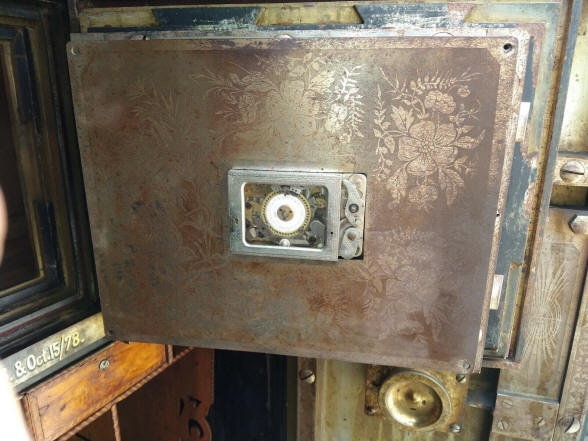
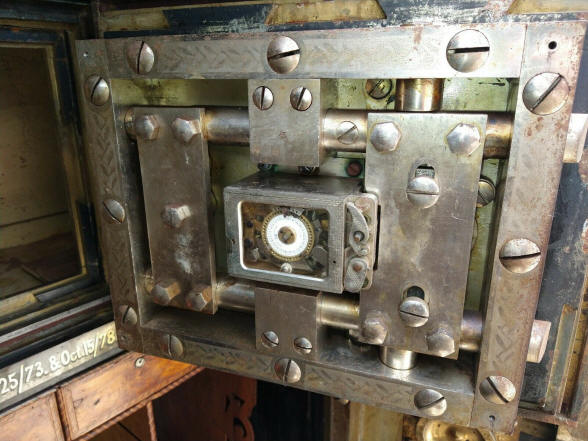
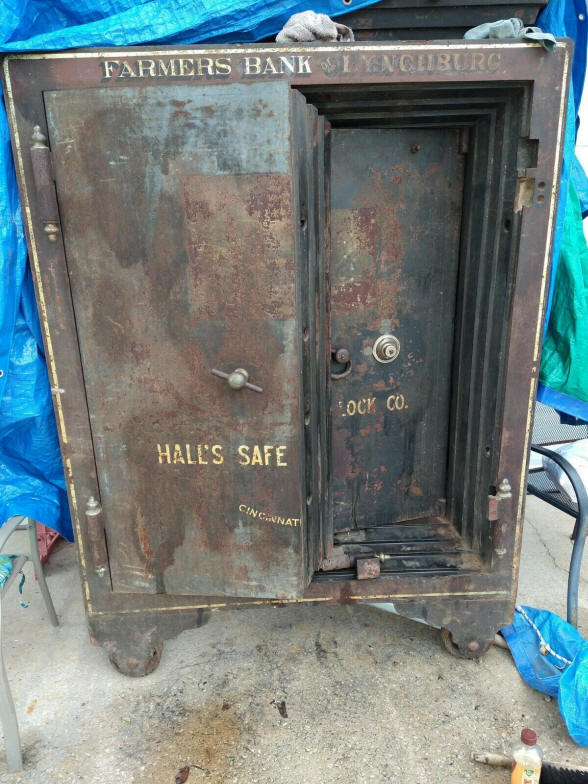
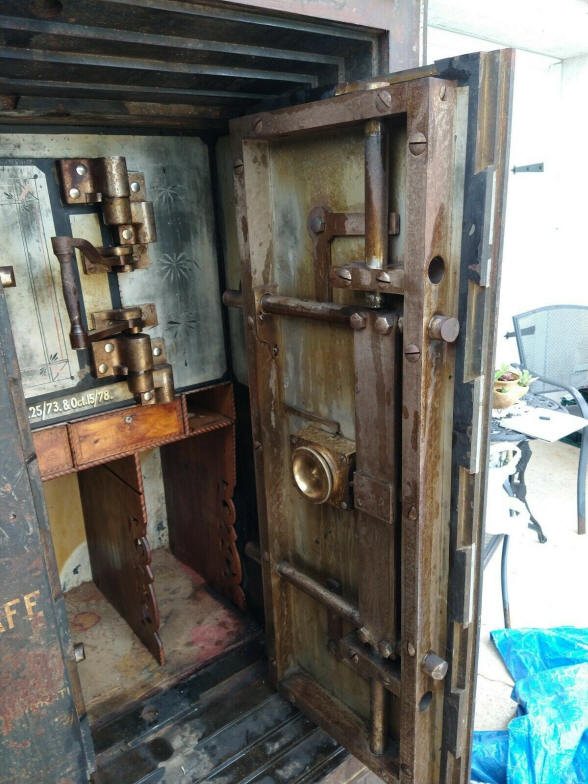
The photos below show a Hall's safe from the Farmer's Bank, Lynchburg, Texas, c.1885. The safe has three layers of doors. First, the thickest side-by-side outer door set is secured by a combination lock, within that is another, somewhat thinner, inner side-by-side door set secured by another combination lock and behind that a single door guarded by a Dalton Dual Guard time lock. This was a very expensive safe with its triple door design and the Consolidated Dual Guard time lock which was the most expensive on the market at the time.
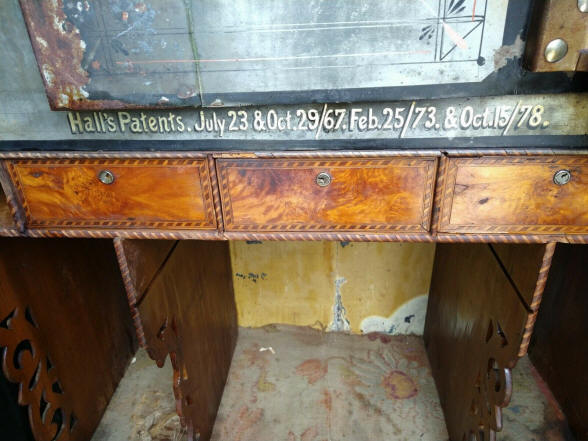
Notice the beautiful wood work within the safe. There are three locking drawers with cubby holes below for larger files. All are intricately inlayed and carved flame mahogany. Safe meaures 5'h x 5'w x4'd and weighs 5000 lbs.
|



(1),(2) American Genius Nineteenth Century Bank Locks and Time Locks, David Erroll & John Erroll, pp 234-235.
(3) The Lure of the Lock, John M. Mossman Collection, pp 163-164